Yoga Destiny
Tel: 732-637-YOGA - E-mail: [email protected]
  • Home
  • Services
  • Prices
  • Prenatal Yoga
  • Mommy & Me Yoga
  • Yoga Parties
  • Kid Birthday
  • Shop
  • Appointments
  • Contact Us
  • About Us
  • Blog
  • Testimonials
  • Special Events

Cooling Yoga Postures and Breathing for Summer

6/22/2010

1 Comment

 
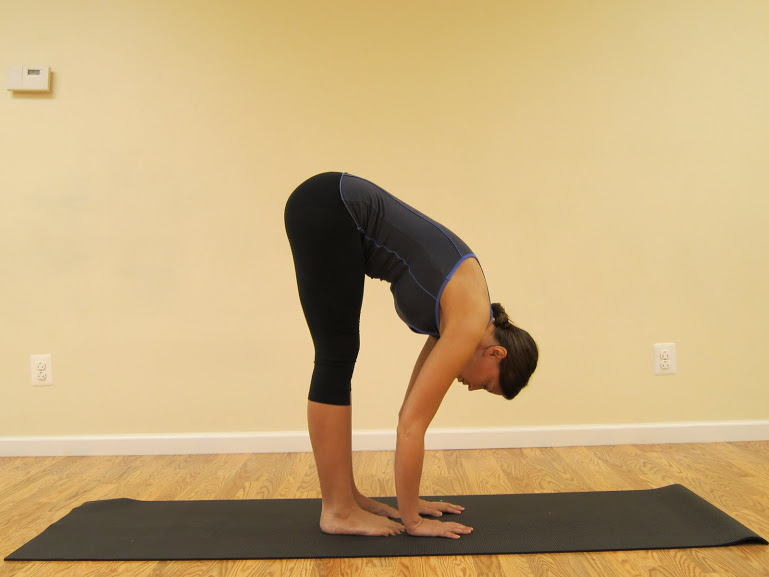
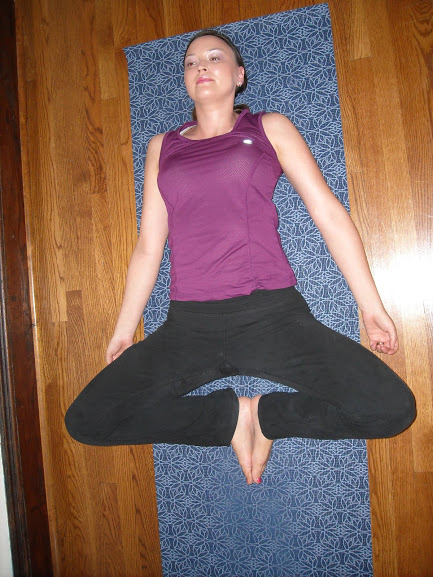
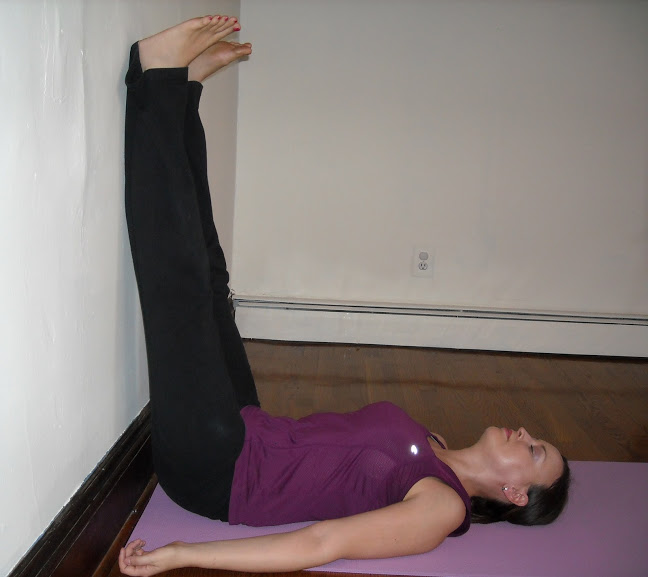
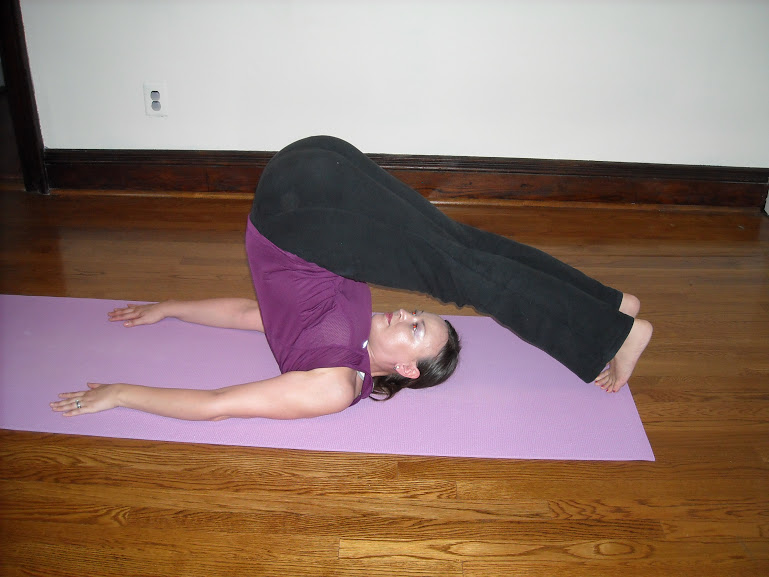
Certain yoga asanas are very efficient at calming the nervous system and cooling the body. To reduce the core temperature or cool anger and anxiety, try practicing these postures:

• Uttanasana (standing forward bend) or other gentle forward bends
• Supta baddha konasa (reclining bound angle)
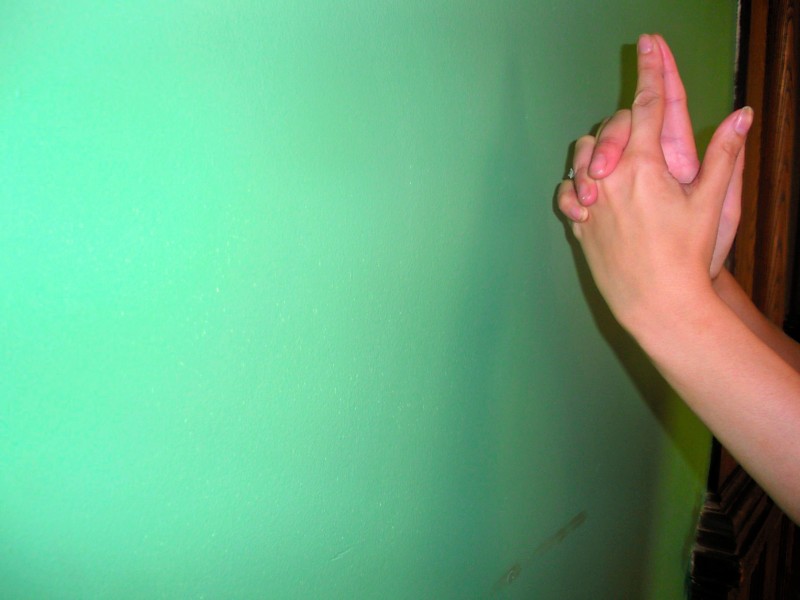
• Viparita karani (legs up the wall)
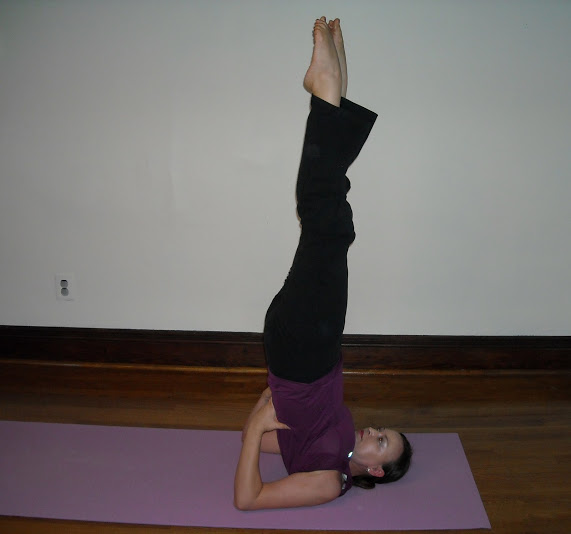
• Salamba sarvangasana (supported shoulder stand)
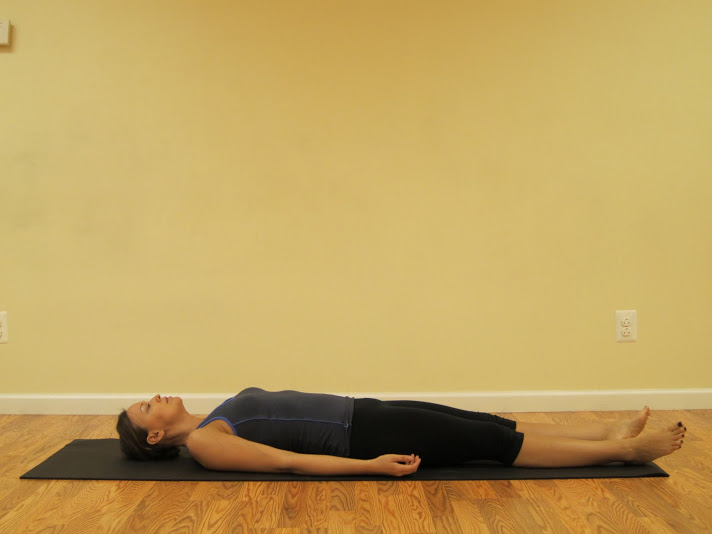
• Savasana (corpse pose)

There are also specific breathing exercises which can cool down the body. The following pranayamas will cool the nervous system, reduce high blood pressure, and even lower a fever.

How to practice Sheetali breath:
Sit in a comfortable cross-legged position with the tip of the index finger and thumb pressed together in a mudra. Rest the wrists on the knees. Curl both sides of the tongue inward to make a tubular shape. With an open mouth and tongue extended beyond the lips, inhale the air gently through the tongue. Keep the eyes open during the inhalation. Then, bring the tongue inside the mouth, close the eyes, and keep the lips closed as you hold the breath. Exhale slowly through the nose without opening the mouth. Repeat for 15-20 rounds.

If you have difficulty, folding your tongue into a pipe shape, try sheetkari breath to achieve similar cooling effects.

How to practice Sheetkari breath:
Sit in a cross-legged position with the hands in gyan mudra (tips of index and thumb pressed together.) With the mouth open, curl the tongue back and rest the tip of the tongue on the upper palate. Keep the upper and lower teeth together and the eyes open as you slowly pull the air into the body. Then, as you begin to hold the breath, close the eyes, shut the lips, and relax the tongue. Exhale slowly through the nose with the mouth closed. Repeat for 15-20 rounds.

I hope that you will find these techniques bring serenity into your life as well as cooling the body’s temperature.

Follow us on Facebook and Twitter. For yoga in Dunellen, NJ or yoga in Piscataway, NJ and yoga in other Central New Jersey areas, get in touch with me at Yoga Destiny.
1 Comment

Start a Revolution

6/11/2010

1 Comment

 
Picture
Wringing out toxins from the body is a key component of revolving triangle (parvritta trikonasana). At first, balance may be an issue, but once you develop strength in the legs and lower back with repeated practice, it will be easier to open the heart as you reach for the sky.

Separate your feet about 3.5-4 feet apart. The front right foot is at a 90 degree angle and the back left foot is turned in slightly (approximately 45 degrees.) Bend forward from the hips. Place your left hand on the outside of your right foot. Rotate your chest toward the sky. Keep the hips turned down to the ground. Extend your right arm up in the air with the palm turned away from the body. The palm of the raised hand is in line with the shoulder. Turn your gaze up to the raised hand.

At this point, you should be feeling a real twist as everything above the navel line is revolving towards the sky and everything below the navel line is facing the ground.

Repeat the pose on the opposite side.

Follow us on Facebook and Twitter. For yoga in Dunellen, NJ or yoga in Piscataway, NJ and yoga in other Central New Jersey areas, get in touch with me at Yoga Destiny.

1 Comment

Triangle Man

6/10/2010

0 Comments

 
Picture
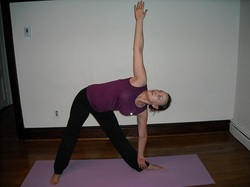
Triangle pose (trikonasa) has always been challenging for me. Trying to keep my shoulders stacked, my hips stacked, and the side of my torso extending in line with my front leg doesn’t come easily. However, it does give me an amazing stretch along the obliques.

The pose can relieve lower backaches and stress. The stimulation of the abdominal muscles also improves digestion. And as with most standing poses, triangle improves strength, stability, and balance.

Here’s how to do it on your right side:
From a standing position, step feet about 3.5-4 feet apart, the right, front foot is at a 90 degree angle and the left, back foot is at a 45 degree angle. The right heel should be in line with the left heel. Keep your hips and torso open. Take your arms out to the sides with hands at shoulder height. Press your left hip out to the side and tilt the right side of your torso over the front of the right leg. Be careful to bend from the hip and not the waist. Keep both sides of the torso long. Rotate your torso toward the sky to keep both shoulders and hips stacked. Extend your left arm up into the air and align the raised hand directly over your left shoulder. Turn your head, and gaze up to the left thumb. Reach down with your right hand. Palms are open and turned away from the body.

Repeat the pose on the left side to achieve full benefit.

For a counter-pose, follow it up with revolving triangle.

Follow us on Facebook and Twitter. For yoga in Dunellen, NJ or yoga in Piscataway, NJ and yoga in other Central New Jersey areas, get in touch with me at Yoga Destiny.

0 Comments

Half Moon

5/27/2010

1 Comment

 
Picture
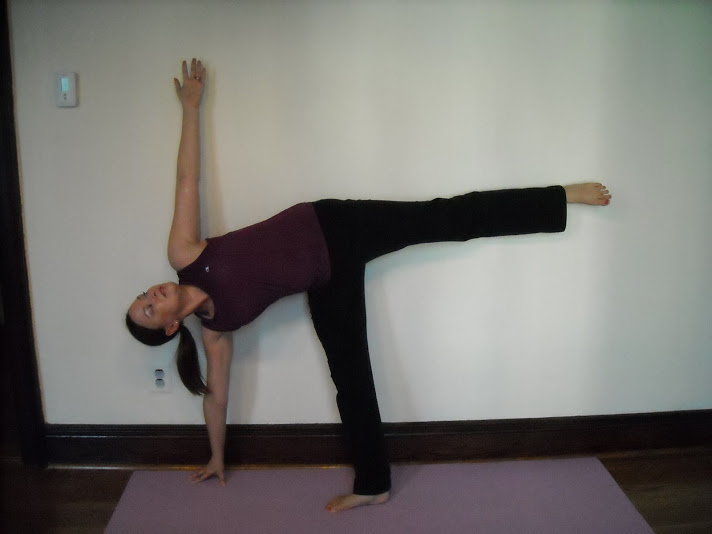
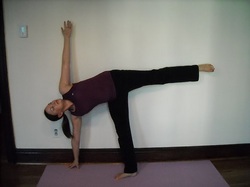
In the past, the half moon pose (Ardha Chandrasana) has been particularly challenging pose for me. I still have moments where I begin to lose my balance in the pose, yet I find myself beginning to enjoy the pose more and more. Half moon opens up my body and engages both the upper and lower half of the body.

The half moon pose is credited with alleviating anxiety, fatigue, constipation, indigestion, and backache. There are many more reasons to practice this posture during your time on the mat including strengthening your abdomen, thighs and ankles, stretching hamstrings, calves and spine, and improving coordination and balance.

There are number of ways to enter the pose such as through triangle or extended side angle. I prefer to enter the pose via triangle (Trikonasa). From triangle pose, bend the front knee. Place your hand about six inches forward of the front foot and a few inches to the outside of the foot. As you straighten through the front leg, lift the back leg off the floor until it is parallel with the ground. To open the front of the body to the side, raise the free arm in to the air until it is in line with the supporting arm and hand, which is already touching the floor.

While I am still cautious about lifting my supporting hand off the floor and rotating my head up to gaze at my raised hand, I am embracing the challenges of the posture and gaining confidence with each small accomplishment as I learn to deepen the pose.

Follow us on Facebook and Twitter. For yoga in Dunellen, NJ or yoga in Piscataway, NJ and yoga in other Central New Jersey areas, get in touch with me at Yoga Destiny.

1 Comment

Mudra Moods

5/20/2010

7 Comments

 
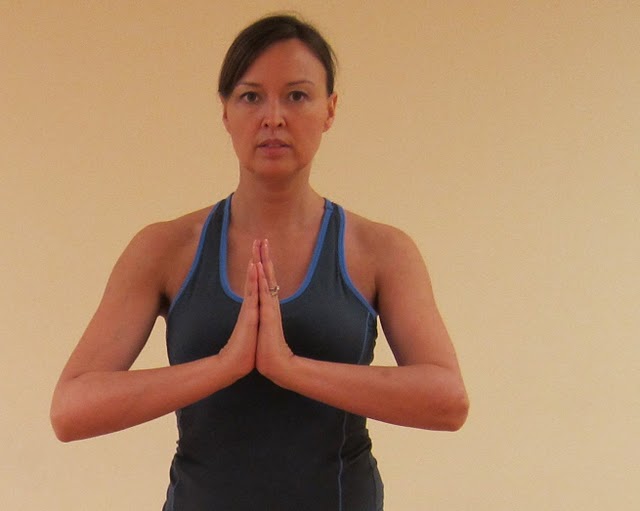
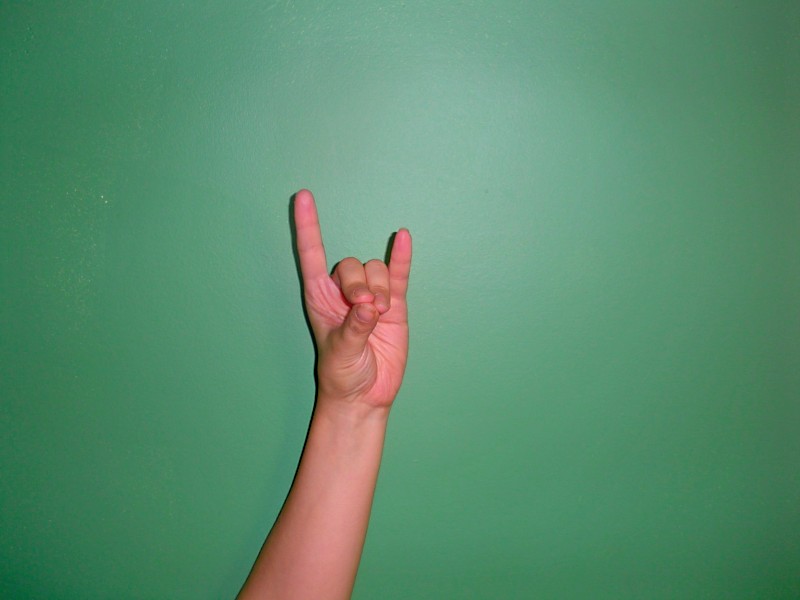
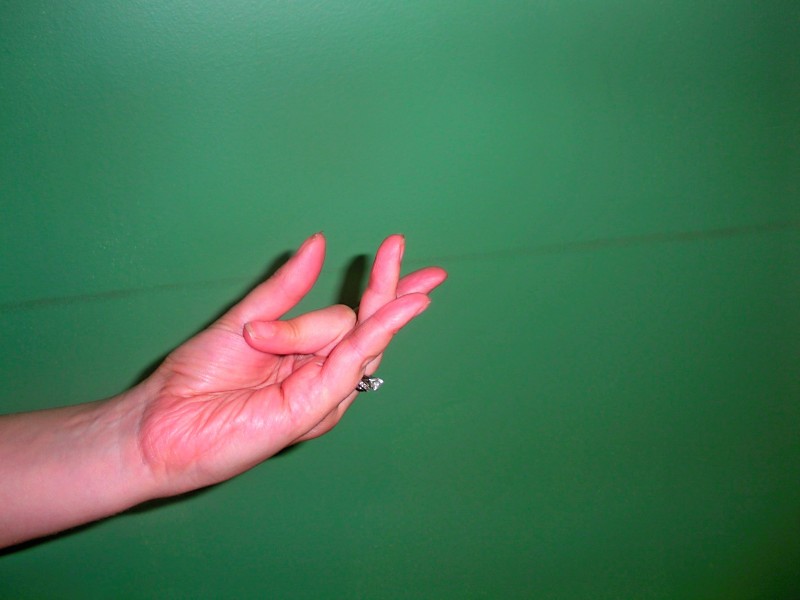
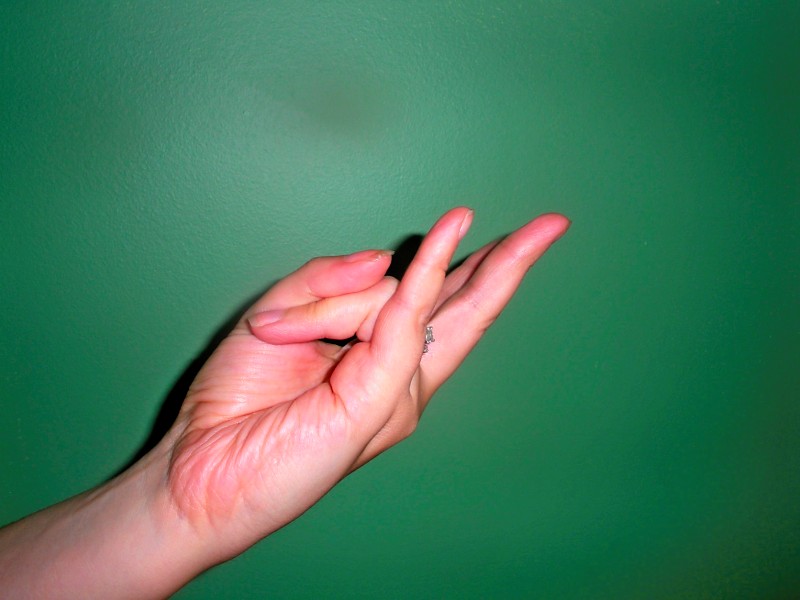
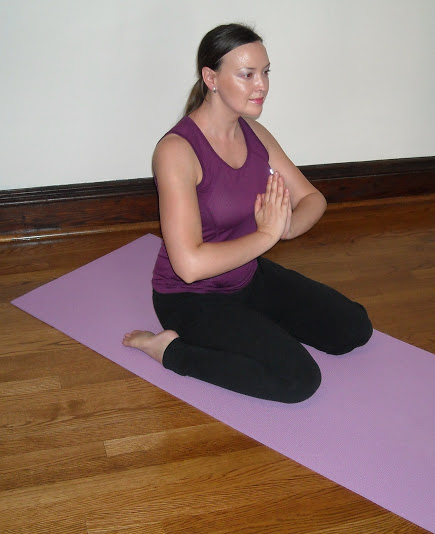
Mudras are hand gestures used to seal energy and are believed to affect mood. A mudra can be practiced with one hand or both hands, and depending on the gesture can involve the hand and fingers or the whole hand. Asanas and meditation practice frequently employ mudras. A very familiar mudra for yoga students is anjali mudra in which the hands are pressed together in front of the heart center (sternum). Shiva Rea describes this gesture as a symbolic connection to the divinity in all things. She adds that by bringing the hands together, the right and left hemispheres of the brain are connected or yoked in the same sense that our active and receptive natures are united. This gesture is also used at the start and end of an action. For example, in India anjali mudra is a salutation for saying hello or goodbye just as we might shake hands with a person in the west.

The five fingers represent five elements:
• Thumb – Fire.
• Index – Air.
• Middle – Ether or the spaces between cells within the body.
• Ring - Earth.
• Pinky – Water.

By balancing these five elements, the mind, body, and soul are united with the divine. From a yoga scientific perspective, electromagnetic currents in the body are brought into balance by joining fingers in a variety of ways. Accordingly, a mudra is believed to affect the flow of energy or prana through the body.

Holding the following mudras for several minutes; ideally for 15 minutes or longer, you can stimulate bodily systems to alleviate certain symptoms and restore health.

Here are a selection of mudras to practice, each performed for a specific purpose:

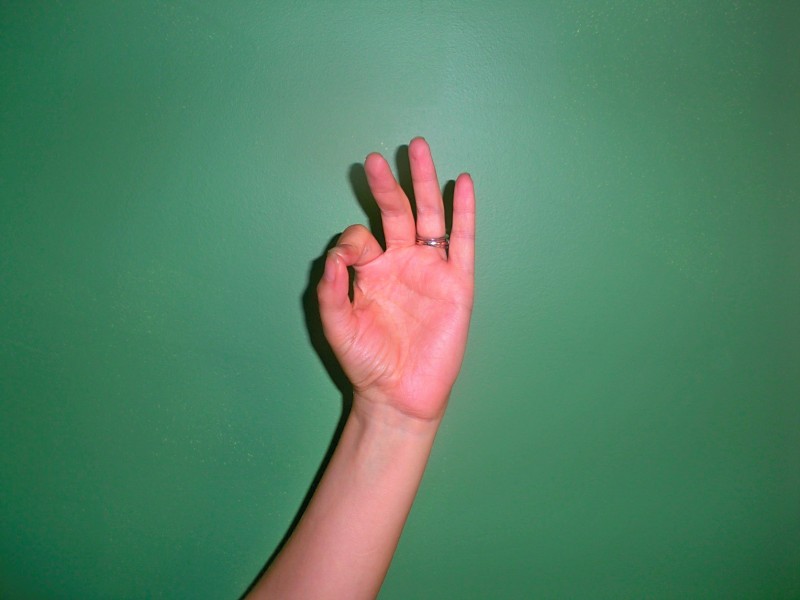
Apaan Mudra
Benefits: Aids in decreasing occurrences of constipation and urinary tract infections while cleansing orifices of waste.
How to do the mudra: Press the tip of the middle and ring finger against the tip of the thumb. Keep the other fingers extended.

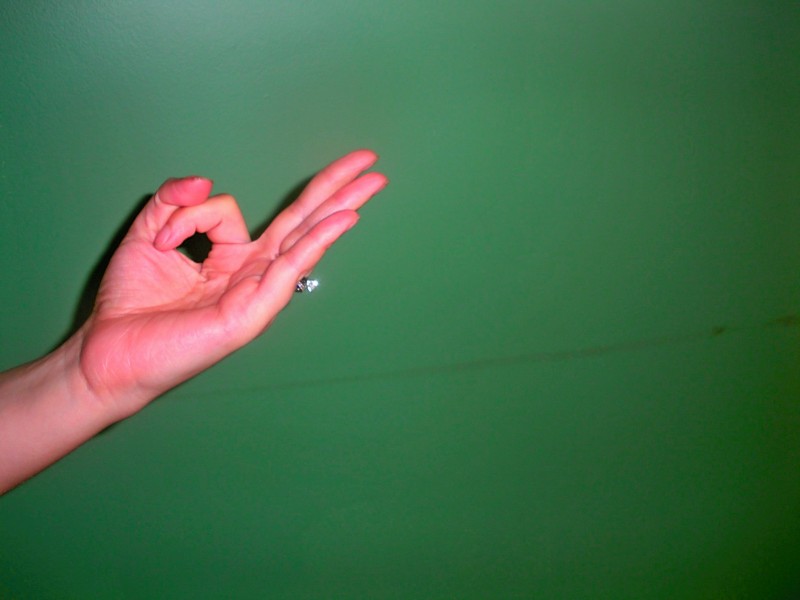
Gyan Mudra
Benefits: Treats mental disorders, restores memory acuity, intellectual development, and well-being.
How to do the mudra: Press the tips of the thumb and index finger together, keeping the other 3 fingers extended.

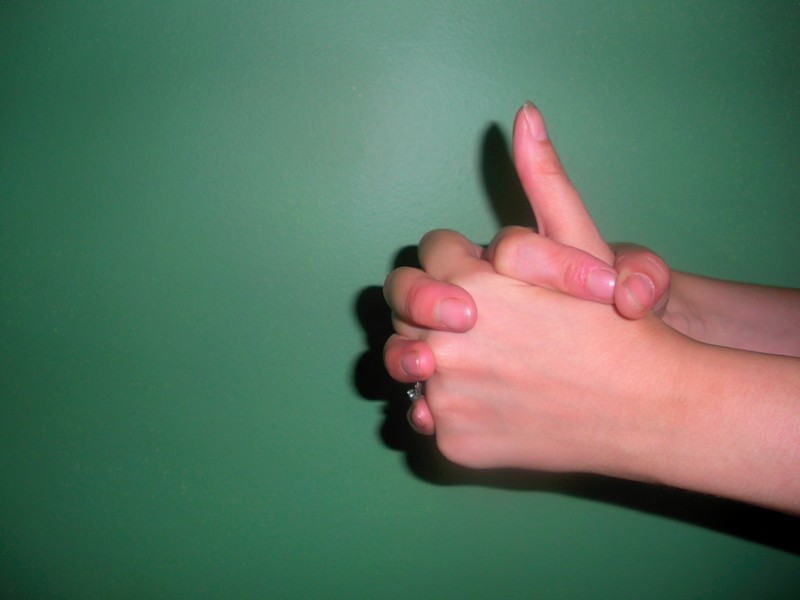
Ling Mudra
Benefits: Creates heat and alleviates cough and cold symptoms.
How to do the mudra: Interlace fingers of both hands. The left thumb stays straight and is encircled by the right thumb and index finger.

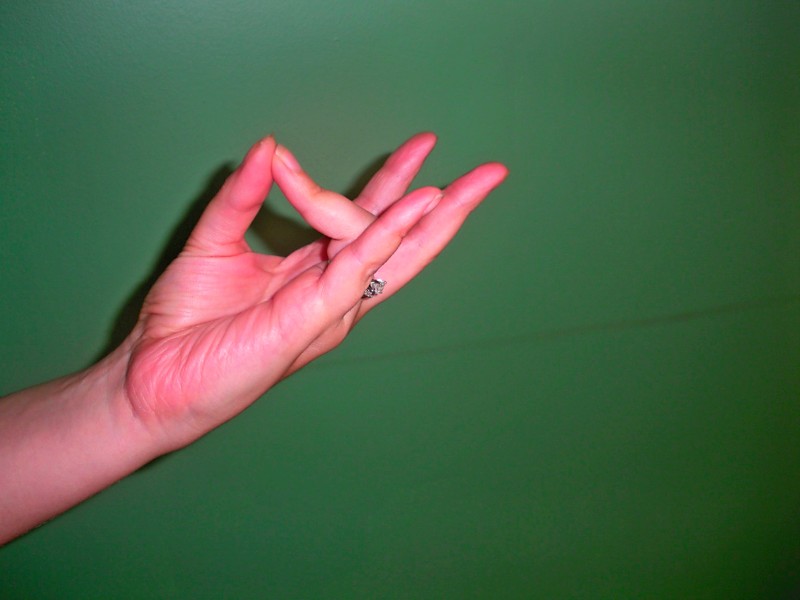
Prana Mudra
Benefits: Moves energy through the body to allay all forms of disease and strengthens vision.
How to do the mudra: Press the tip of the ring and little finger against the top of the thumb. Keep the other
two fingers extended.

Prithvi Mudra
Benefits: Creates happiness and a strong body.
How to do the mudra: Touch the tip of the ring finger to the tip of the thumb.

Shoonya Mudra
Benefit: Alleviates earaches.
How to do the mudra: With the middle finger placed at the base of the thumb, rest the thumb on the middle finger while keeping the other three fingers extended.

Surya Mudra
Benefits: Reduces weight.
How to do the mudra: Place the tip of the ring finger on the base of the thumb. Allow the thumb to gently
press back of the front of the ring finger.

Varun Mudra
Benefits: Refreshes the body and improves blood quality.
How to do the mudra: Press the tip of the thumb against the tip of the little finger.

Vayu Mudra
Benefits: Helps with arthritis and trembling caused by Parkinson’s disease.
How to do the mudra: Place the index finger on the base of the thumb. Keep the other fingers extended.

There are also mudras, which are partiuclar to Buddhist iconography that are used to convey an inner expression or state of mind.

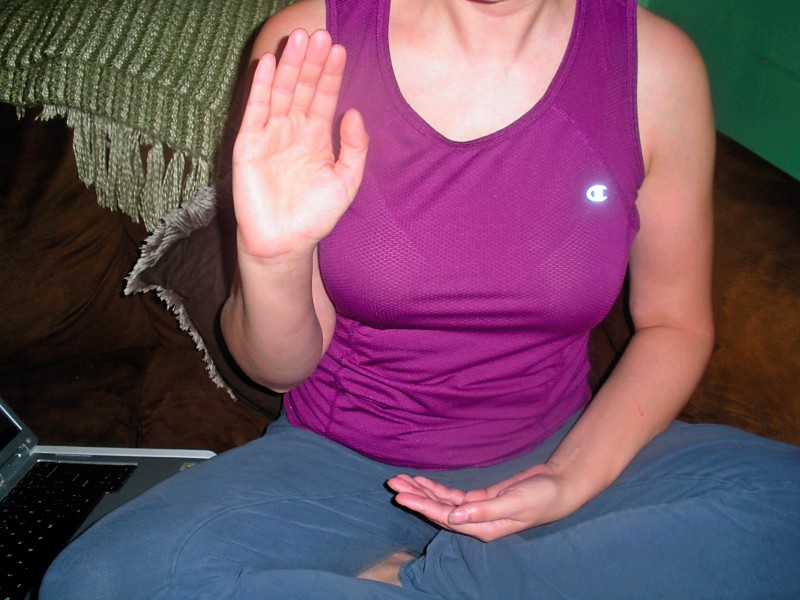
Abhaya Mudra
Gesture meaning: Granting protection.
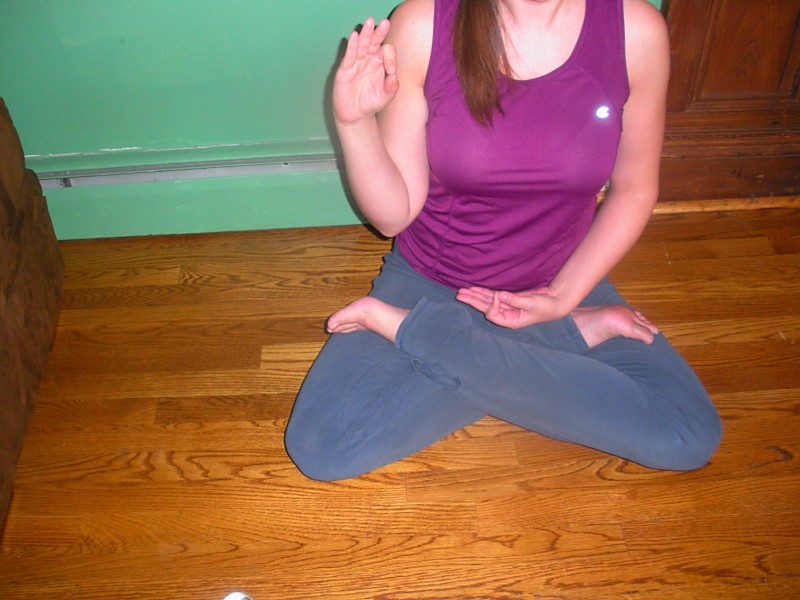
How to do it: The palm of the right hand is turned out from the body and held at shoulder height.

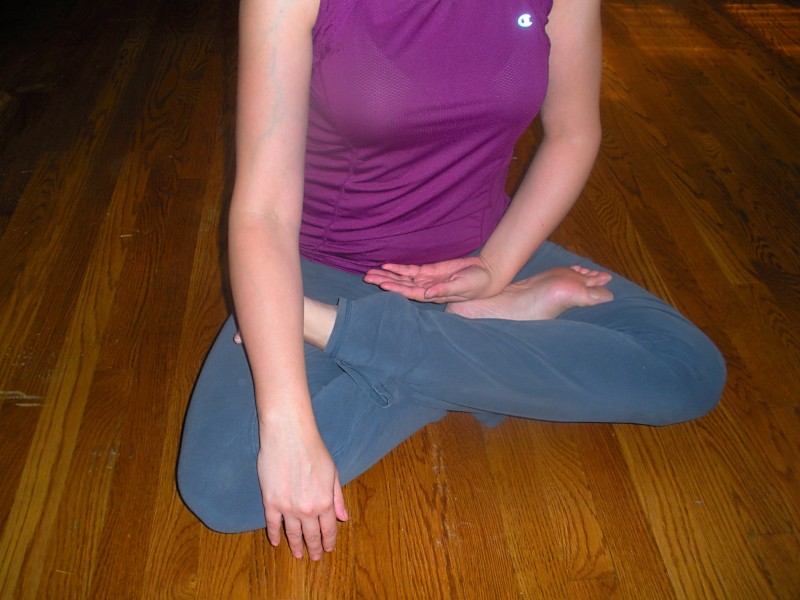
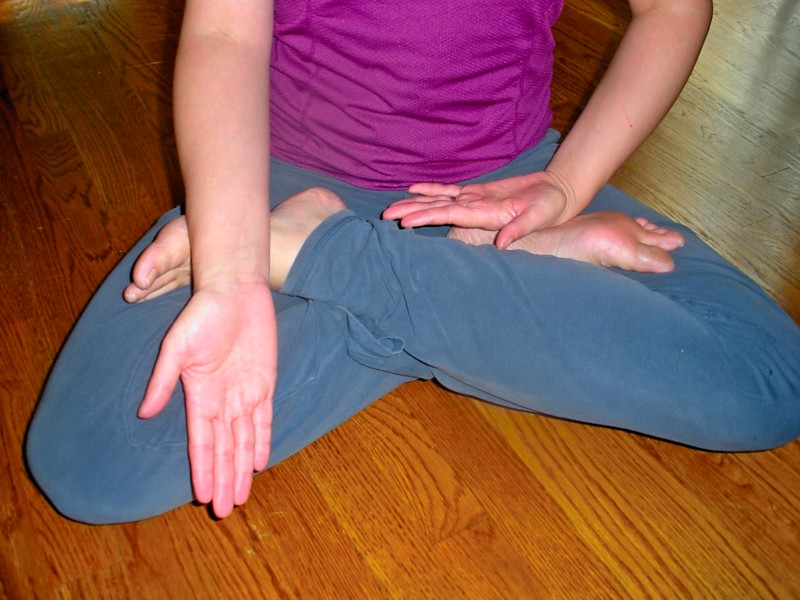
Bhumisparsa Mudra
Gesture meaning: Touching the earth.
How to do it: The right hand hangs over the right knee with the palm turned in to the body and fingers pointing to the ground. The palm of the left hand is turned up and rests in the lap.

Dharmachakra Mudra
Gesture meaning: Turning the wheel of teaching.
How to do it: The left hand is turned toward the body and the right hand away from the body. The thumb and index fingers are pressed together with each hand.

Dhyana Mudra
Gesture meaning: Meditation.
How to do it: The right hand rests in the palm of the left hand with the tips of the thumbs touching each other. Hands are placed on the lap in this gesture.

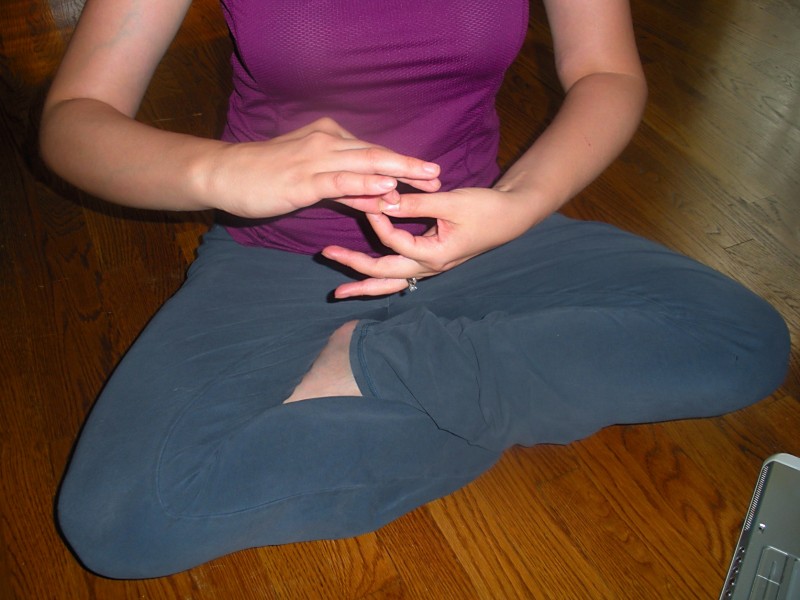
Uttarabodhi Mudra
Gesture meaning: Supreme enlightenment.
How to do it: The fingers of both hands are interlaced with the thumb and index finger extended up and pressed together. The hands are placed in front of the chest.

Varada Mudra
Gesture meaning: Granting wishes.
How to do it: The right hand is turned towards the floor with the palm facing away from the body.

Vajra Mudra
Gesture meaning: Confidence.
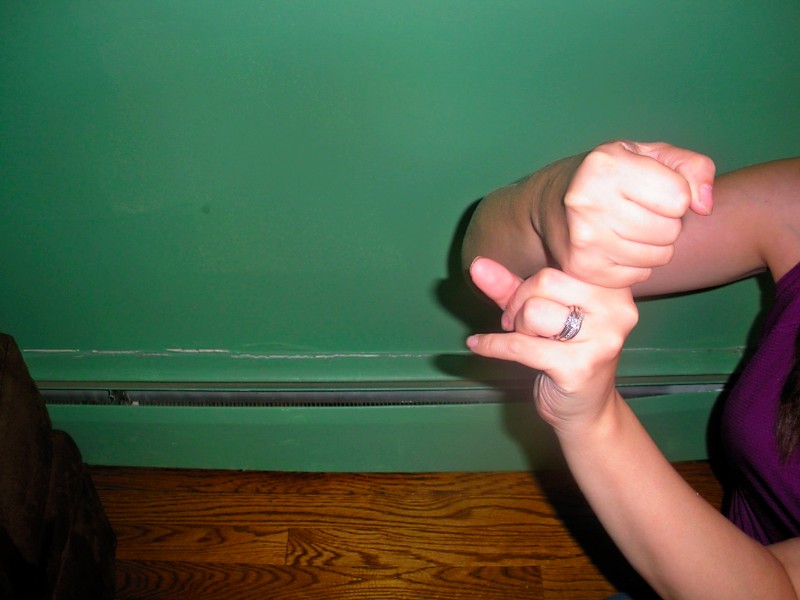
How to do it: The left index finger is wrapped inside the fist of the right hand.

Vitarka Mudra
Gesture meaning: Teaching.
How to do it: Place the index finger on the thumb. Both hands will use this gesture. Keep the right hand turned outward at shoulder height. Keep the left hand turned outward and level with the hip.

Now pick a mood and strike a mudra. :)


For more information about mudras, checkout - Mudra: Gestures of Power

Follow us on Facebook and Twitter. For yoga in Dunellen, NJ or yoga in Piscataway, NJ and yoga in other Central New Jersey areas, get in touch with me at Yoga Destiny.
7 Comments

Take a Flying Leap

5/17/2010

1 Comment

 
Hanumanasana - Monkey Pose

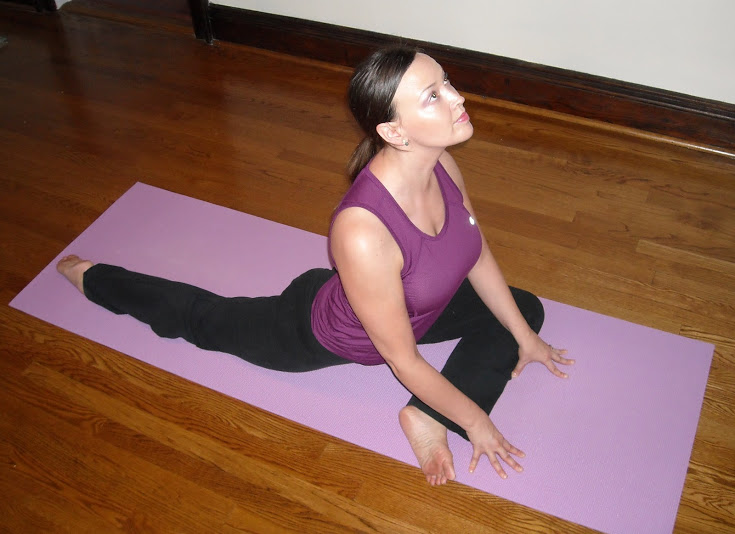
This beautiful pose is named after Hanuman, the monkey god. As the faithful servant of Rama, Hanuman leapt from the southern tip of India to Sri Lanka to bring a healing herb for his master Rama’s wounded brother, Laksmana, in a show of devotion. Likewise, the pose is a full split resembling this momentous leap.

The monkey pose opens the hip flexors and hamstrings as well as stimulating the abdominal organs. Avoid this pose if you have a groin or hamstring injury.

I like to practice the following poses, prior to attempting Hanumanasana, monkey pose:
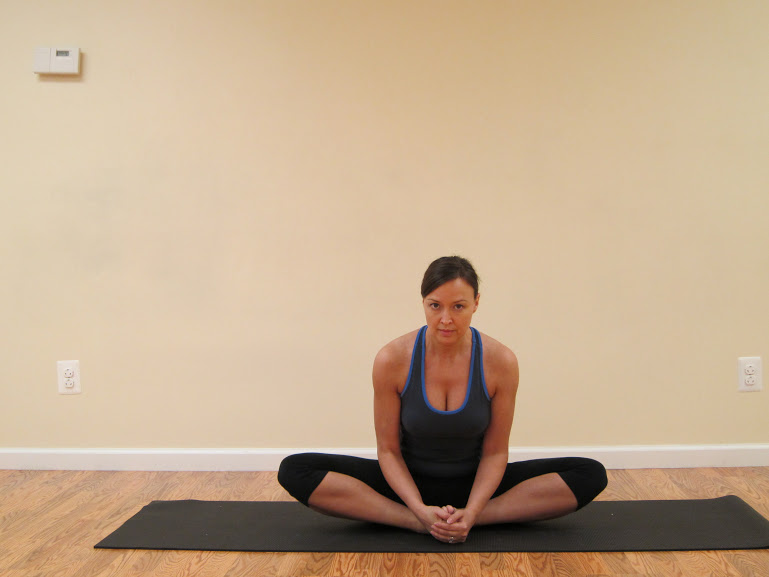
• Baddha Konasana (bound angle pose)
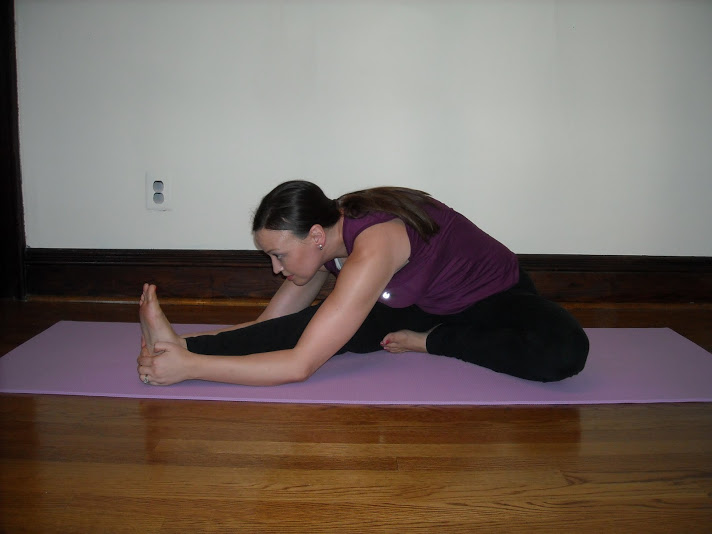
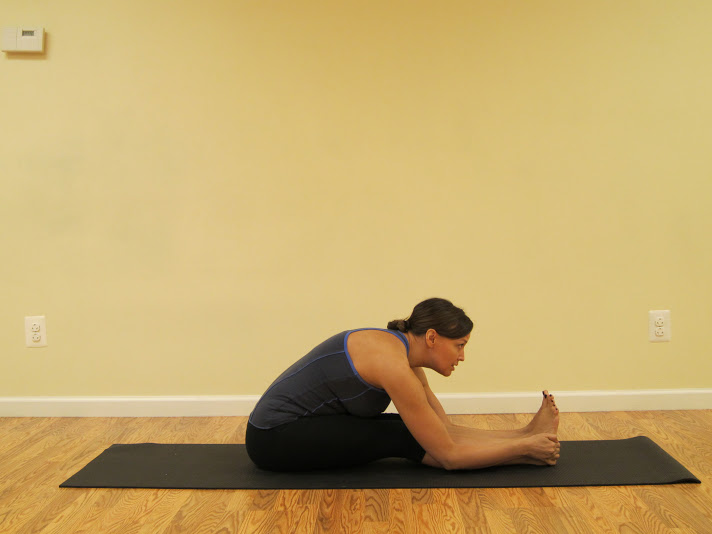
• Janu Sirsasana (head to knee pose)
• Paschimottanasana (seated forward bend pose)
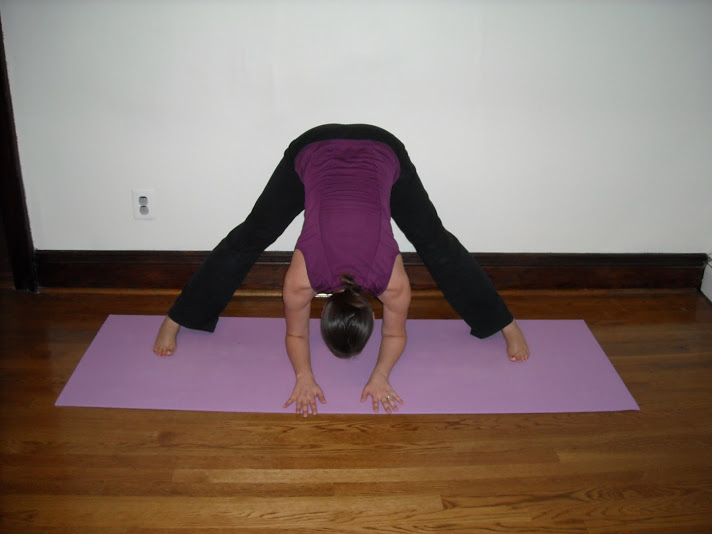
• Prasarita Padottanasana (wide-legged forward bend)
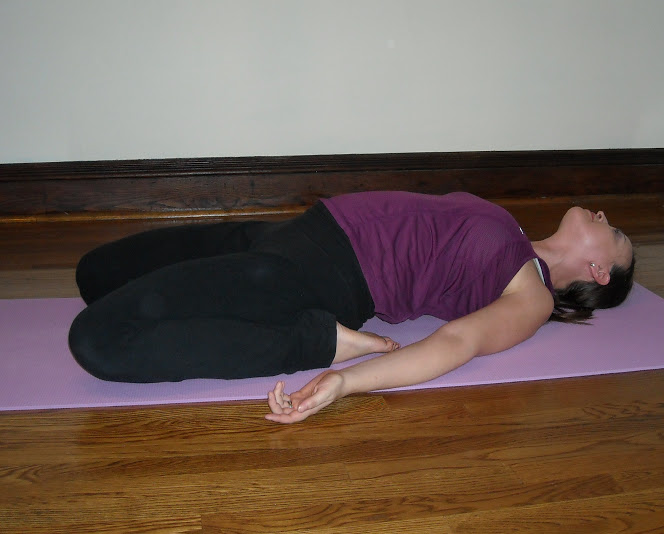
• Supta Virasana (reclining hero pose)
• Supta Baddha Konasana (reclining bound angle pose)
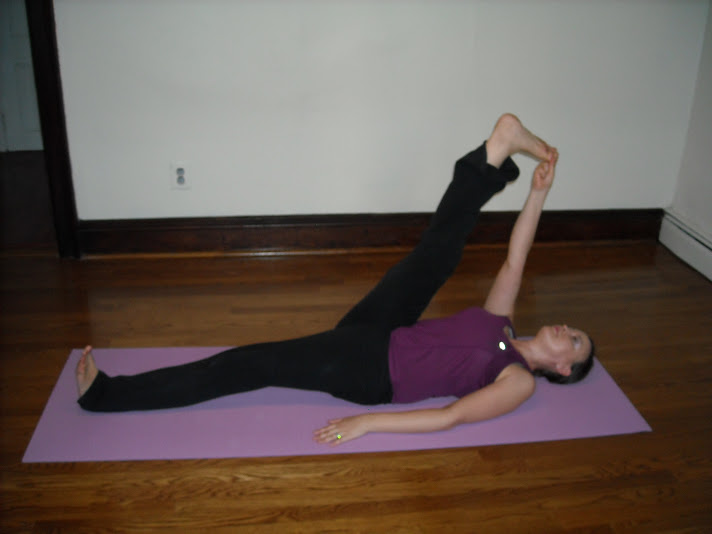
• Supta Padangustasana (reclining big toe pose)
• Upavistha Konasana (wide-angle seated forward bend pose)
• Urdhva Prasarita Padasana (upward extended feet pose)
• Uttanasana (standing forward bend pose)
• Virasana (hero pose)

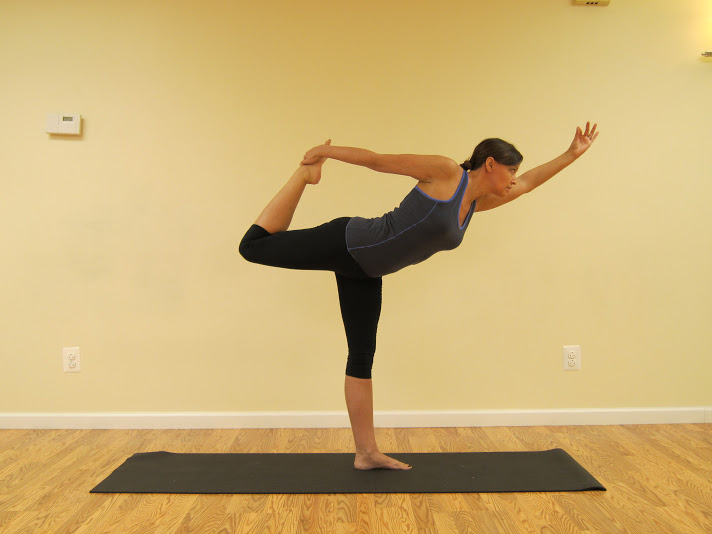
After practicing Hanumanasana, you will find that eka pada rajakapotasana (one-footed pigeon pose), natarajasana (king dancer pose), paschimottanasana (seated forward bend), and upavishta konasana (wide-angle seated forward bend pose) can be attempted with greater ease.

Follow us on Facebook and Twitter. For yoga in Dunellen, NJ or yoga in Piscataway, NJ and yoga in other Central New Jersey areas, get in touch with me at Yoga Destiny.
1 Comment

Turn Your World Upside-down

5/10/2010

0 Comments

 
Maybe you feel like I used to and wonder why would any sane person want to stand on their head? Surprisingly, the benefits of inversions are numerous. Just by raising your feet higher than your head, you can reduce stress, lower blood pressure, and increase blood flow to the brain.

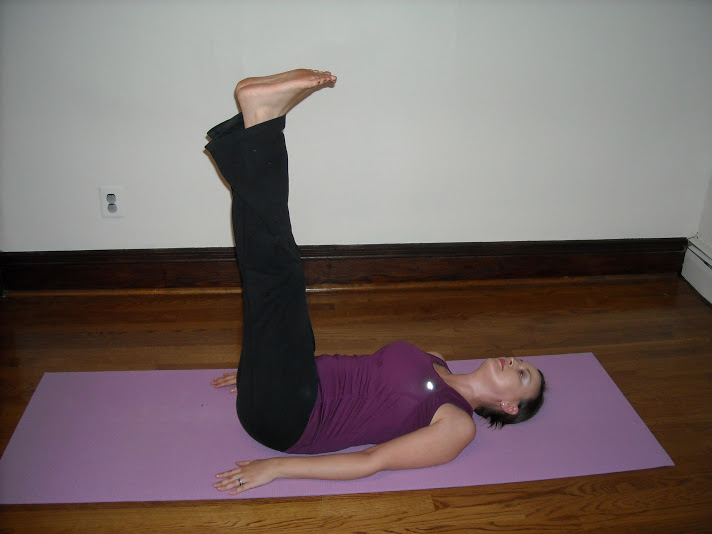
Headstands, in particular, can increase stamina and upper body strength as well as improve circulation. If you’re not ready for headstand or handstand, it doesn’t mean that you can’t enjoy the health advantages of inverted poses. Restorative inversions such as the legs up the wall pose can also reverse the natural flow of blood and metabolic waste throughout the body. In fact, the longer an inversion is held, the more effectively waste can be released back into the bloodstream for elimination.

There are some reasons you may need to avoid inversions. Namely, do not perform inversions if you are pregnant, have neck pain, high or low blood pressure, neck injuries, and/or are menstruating.

Several well-known inverted postures are handstand, headstand, plow, scorpion, and shoulderstand. Some of these poses are advanced and should only be attempted with supervision after developing core strength over an extended period of practice.

Inversions are documented to have physiological benefits for the cardiovascular, lymphatic, nervous, and endocrine systems. So don’t worry, put your feet up and change your outlook. 

Follow us on Facebook and Twitter. For yoga in Dunellen, NJ or yoga in Piscataway, NJ and yoga in other Central New Jersey areas, get in touch with me at Yoga Destiny.
0 Comments

Propping Up Your Pose

4/30/2010

0 Comments

 
If a yoga pose seems out of your reach, think again. Many poses can be modified to work with your current range of motion with the use of a prop.

Iyengar yoga encourages the use of props to make poses accessible to everyone regardless of your body’s current range of motion. Props are a functional and safe way to hold a position, which otherwise might cause damage to a particular area of the body because of muscular strain or overstretching created by the position.

Listed below are typical yoga props and potential applications:

• Yoga block: It can be turned flat, on the edge, or the end for back relief in some supine poses or to steady other standing poses by creating a stable platform.
• Yoga strap: The buckles on the straps can be adjusted to hold limbs in place while practicing a variety of poses. Apply it when you want to maintain alignment or deepen a stretch.
• Blankets: This prop is frequently found in yoga studios to give an extra lift or cushion to seated poses, stacked to elevate the legs, or to cover the body as it cools down in savasana during relaxation.
• Yoga bolster: This large, firm cushion is often used for support in restorative poses such as viparita karani (legs up the wall pose) to alleviate discomfort in the lower back.
• Balls: Utilizing a ball can be a boon for alignment and core muscle development.
• Chairs: This prop isn’t limited to senior yoga, most people can benefit from its employment from facilitating better twists to bending back upon for wider chest openings.
• Wall: For beginners, inversions such as headstand and handstand using a wall can be a secure support for learning to trust and develop your strength and balance. Think of the wall as a partner, and you can push off it, lean on it, align a pose against it, or press into it.
• Sandbags: Here’s an effective way to give weight to a pose and deepen a stretch. Legs can release further to the floor in a bound angle pose by placing a sandbag on the inner thighs. Sandbags can bring a breath of fresh air (pun intended) to breathing exercises. Put the sandbag on your belly to foster a stronger awareness of the abdominal muscles and improve the breath.
• Eye pillow: By placing an eye pillow over your eyes during relaxation, it can be a pleasant way to soothe tired eyes and block out light. Eye pillows filled with lavender, which is known as a calming agent, are also popular for therapeutic purposes.

Go ahead, give your form a boost and take the strain out of seemingly unattainable poses.


Follow us on Facebook and Twitter. For yoga in Dunellen, NJ or yoga in Piscataway, NJ and yoga in other Central New Jersey areas, get in touch with me at Yoga Destiny.
0 Comments

Yoga Styles from A to Z

4/29/2010

0 Comments

 
There are many ways of practicing yoga and new styles seem to continuously evolve. Many of these styles overlap. Although I am sure to have left out some styles, here is a start:

Ananda: Developed by Swami Kriyananda to be a gentle, inward experience with each pose practiced with its own silent affirmation. This yoga style is not an athletic or aerobic practice. Poses are practiced with safety and correct alignment in mind. Energization Exercises made up of 39 special energy-control techniques are a unique aspect of this practice. Pranayama and classical meditation techniques are also taught.

Anusara: Developed by John Friend. The “Universal Principles of Alignment™" is used to bring what is referred to as attitude, alignment, and action to each pose. Over 265 poses are taught as part of the study.

Ashtanga: Developed by K. Pattabhi Jois. This demanding series of postures is designed to build strength, flexibility and stamina. Poses are synchronized with the breath to improve circulation and calm the mind.

Bikram™: Developed by Bikram Choudhury. A series of 26 asanas and 2 breathing exercises are performed at a temperature of 105°F. The belief is that practicing in the heat will prevent injury, deepen stretches, and relieve tension.

Bhakti Yoga: Referred to as the religion of love, bhakti is a spiritual path to experiencing the divine. Through faith and constant remembrance of God, one ultimately forms a union with the divine. In practice, the individual seeks the presence of God in every living being through acts of worship, devotion, and service. The doctrine “Love is God and God is Love” is fundamental to bhakti yoga.

Forrest Yoga™: Developed by Ana Forrest, this vinyasa-style of yoga integrates Native American healing principles to mend psychic wounds. By engaging in a series of dynamic poses with an attention on abdominal work and breathing, Forrest asserts that the created heat will release toxins and free emotions held in the body.

Hasya Yoga (Laughter Yoga): Developed by Jiten Kohi and popularized by Dr. Madan Kataria and Madhuri Kataria. The combination of laughing and yogic breathing oxygenates the body, improves circulation and digestion, enhances the immune system, and strengthens cardiovascular functions.

Hatha: Introduced by Yogi Swatmarama in the 15th century, many of the yoga styles listed here fall under the heading of hatha yoga. It is a physical practice to prepare the body to sit for long periods of meditation. The focus is placed on poses, yogic breathing, and meditation.

Integral Yoga®: Developed by Swami Satchidananda. The method integrates hatha, bhakti, japa, jnana, karma, and raja yoga elements for a complete development of the physical, intellectual, and spiritual aspects of the practitioner. Heavy emphasis is placed on pranayama and meditation.

ISHTA (Integrated Science of Hatha, Tantra, and Ayurveda): Developed by Kavi Yogi Swarananda Mani Finger and Yogiraj Alan Finger. The practice blends postures, breathing, and visualization meditation tailored to each individual’s needs. This yoga style intends to instill greater self-awareness and self-transformation.

Iyengar: Developed by B.K.S. Iyengar. Careful attention to detail and the precise alignment of postures, as well as the use of props such as blocks and belts are hallmarks of this yoga style. Postures are generally held for significant period of time to bring awareness to the pose and deepen it. Over 200 classical asanas and 14 different types of pranayamas are within the Iyengar method of yoga.

Japa Yoga
: The silent or spoken repetition of a mantra or name of God. Japa mala, a string of 108 beads (akin to a rosary) may be used to count each repeated mantra. The act is a single-minded devotion and develops concentration.

Jivamukti Yoga: David Life and Sharon Gannon are the founders of Jivamukti Yoga. This practice is physically challenging with each class centered on a theme that is explored through yogic scripture, chanting, meditation, asana, pranayama, and music.

Jnana Yoga: Also known as the yoga of knowledge, the practitioner seeks to know the truth about life by transcending the individual thoughts and sense organs in order to achieve enlightenment. Students of this style of yoga read scriptures, meditate, and practice selfless devotion to God.

Kali Ray TriYoga®: Developed by Kali Ray. TriYoga works to connect the body, mind, and spirit. Each pose is designed to flow into the other and is practiced in unison with the breath and awareness. The poses focus on developing strength and flexibility.

Karma Yoga: The path of action and selfless service or more simply put as the yoga of doing the right thing for its own sake.

Kripalu Yoga: It believes that prana (the subtle flow of energy or life force) can be blocked or disturbed by thought. The physical practice of asanas assists in letting go of emotional and mental blocks. As a result prana is able to flow unobstructed through the body to bring about healing.

Kundalini: In the tradition of Yogi Bhajan, Kundalini is untapped energy, often represented by a coiled snake residing at the base of the spine. This energy can be moved up in to each of the seven chakras. Once the energy reaches the crown chakra, enlightenment occurs. Chanting, kriyas (a sequence of poses and breathing to cleanse blocked energy channels in the body) focused on a specific area of the body, meditation, and a closing song are usually part of a Kundalini class.

Oki-Do Yoga: Created by Masahiro Oki. The use of laughter is a key element in the practice. Any fear or frustration initiated by moving into or holding the pose can be diffused with laughter. Difficult poses may also be assisted by a partner for support, balance, or stretching.

ParaYoga®: Founded by Yogarupa Rod Stryker. Vinyasa krama or sequencing of poses is supposed to help students move deeper into familiar postures. This style of yoga also strives to seamlessly incorporate asana, pranayama, bandha, mudra, visualization, meditation, chanting, kriya, mantra, and kundalini.

Prana Flow Yoga: Developed by Shiva Rea. Asanas are fused with chanting, visualization, chakras, marmas (pressure points in the body), and pranayama. Poses are sequenced to flow from one to the other with the breath and can include standing poses, arm balances, twists, backbends, hip openers, forwards bends and inversions.

Power Yoga: Adapted from Ashtanga by Beryl Bender Birch and Bryan Krest. This type of yoga is similar to Ashtanga or a vinyasa-style yoga. However, power yoga does not follow a set series of poses as Ashtanga does. The focus is on strength and flexibility.

Raja Yoga: Mind and emotions are brought into balance through ethical practices, concentration, and meditation. Asanas are used to ready the body for prolonged meditation. Meditative poses such as lotus pose (padmasana), accomplished pose (siddhasana), easy pose (sukhasana), and thunderbolt pose (vajrasana) are commonly applied in this practice.

Restorative Yoga: Poses to quiet the mind, relax the body, relieve fatigue and stress are emphasized in this type of yoga. Props may be used to support the poses for greater ease while holding the posture.

Sivananda: Created by Swami Vishnu-devananda. This form of hatha yoga gives prominence to relaxation and yogic breathing. The class is generally structured around savasana, skull-shining breath, alternate nostril breathing, sun salutations, and 12 basic asanas.

Somatic Yoga: Created by Eleanor Criswell Hanna. This gentle style of yoga includes visualization, slow transitions into postures, conscious breathing, and mindfulness joined with recurrent relaxation between postures. The practice loosens constricted muscles.

Somayog: Developed by Danielle Munuz. This gentle practice is both therapeutic and restorative with a focus on the spine, pelvis, and hips to improve spinal flexibility and relieve back pain. Movements are slow & repetitive. Meditation, relaxation, and breathing are also components of the class.

Svaroopa® Yoga: Developed by Rama Birch. Svaroopa is not an athletic type of yoga. This gentle style of yoga is intended to loosen and relax muscles. The emphasis is on the opening of the spine by beginning at the tailbone and progressing through each spinal area. The majority of the poses use props for support. Correct alignment of the body is given priority in each asana.

Tantra Yoga: This branch of yoga uses ritual for the realization of our own divine nature. Physical and ritual cleaning, breathing exercises, contemplation, visualization, and mantra are part of the path. The individual is encouraged to slow down and stay present in all aspects of behavior. Instead of renouncing all desires for asceticism, employing each desire with a sense of awareness can allow the practitioner to experience the divine in every act whether it is simply eating a piece of fruit or the experience of sexual union. All facets of life are woven together as an expression of the divine. For example, the female and male or spiritual and corporeal are blended and neither is a barrier to spiritual enlightenment, just another source of energy.

Viniyoga: Developed by Sri. T. Krishnamacharya. This gentle practice adapts yoga to suit each individual’s need, and function is stressed over form. The flow of the breath is connected with movement of the spine. Practices may also include pranayama, meditation, reflection, study and other classic elements.

Follow us on Facebook and Twitter. For yoga in Dunellen, NJ or yoga in Piscataway, NJ and yoga in other Central New Jersey areas, get in touch with me at Yoga Destiny.
0 Comments

Restorative Poses

4/19/2010

0 Comments

 
Picture
Ah, some of my favorite asanas are restorative poses. These poses are intended to reduce stress and restore health. Try winding down from a stressful day, by resting in savasana (corpse pose). It feels great and can calm the mind and body.

Most restorative poses can be held for 10 minutes or longer because of their relaxing nature, which makes these poses practical exercises, if recovering from illness or injury. For greater ease, props such as blankets, bolsters, chairs, or straps can be used to prevent strain while in a restorative pose.

While in a restorative pose, pay attention to any areas of tension within the body, then breathe into this spot, letting the exhalation release the tightness. Restorative poses should bring about a sense of relaxation, renewal, effortlessness, and ease by soothing the nervous system and releasing deeply held tension.

Some common restorative poses are:
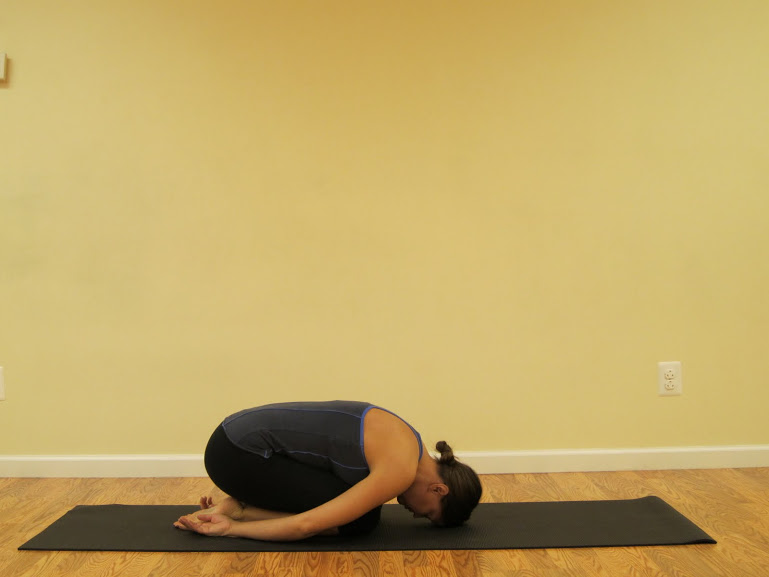
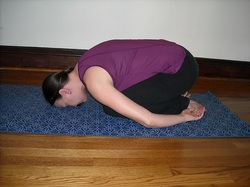
  • Balasana (child’s pose): a resting posture which can be used between challenging asanas.
  • Savasana (corpse pose): a reclining posture to slow down the heart rate, reduce fatigue, and deeply relax the body.
  • Supta baddha konasana (reclining bound angle pose): a hip opening position which will improve circulation and stimulate abdominal organs. For full relaxation benefits, place bolsters or blankets beneath the outer thigh for support, if the inner thigh and groin stretch is too much.
Another restorative pose that I particularly enjoy practicing is viparita karani (legs up the wall pose), which elevates the legs above the head. It’s a treat for achy legs and tired feet, but the benefits don’t stop there. Relief for mild backaches is another one of its therapeutic applications. The pose is also well known for preventing varicose veins and stabilizing blood pressure.

Follow us on Facebook and Twitter. For yoga in Dunellen, NJ or yoga in Piscataway, NJ and yoga in other Central New Jersey areas, get in touch with me at Yoga Destiny.


0 Comments
<<Previous
Forward>>
    Picture


    Author
    Denise Hitch
    Certified Hatha Yoga 
      Instructor


    Archives

    January 2016
    March 2015
    August 2014
    June 2014
    July 2012
    May 2012
    November 2011
    October 2011
    September 2011
    July 2011
    June 2011
    August 2010
    July 2010
    June 2010
    May 2010
    April 2010
    March 2010
    February 2010
    January 2010

    Categories

    All

Powered by Create your own unique website with customizable templates.
Photo used under Creative Commons from lululemon athletica